Blog
Welcome to Energy Arts Blogs where you can find valuable articles about the Taoist energy arts to support your learning and participate in our community.
As the foremost Western expert in Wu style tai chi and Yang style tai chi, holding direct lineages from China, Bruce Frantzis teaches six powerful qigong sets, as well as bagua zhang and hsing-i from the martial, health, and meditation perspectives.
Energy Arts Blogs bring practical advice on esoteric topics. From frozen diaphragms to Dune philosophy to martial arts masters, the Energy Arts Blogs page is as diverse as it is useful.
Recent Posts
The Art of the Micro-Practice
By Brian Cooper
I began
teaching in 1989 and still have many students who started with me back
then. These long-term students have not
found any problem practicing on a regular basis and that’s probably why they
are long-term students. In more recent
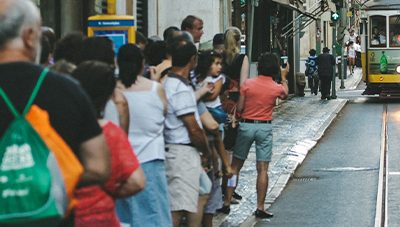
times many of the newer students have complained that they don’t have time to practice
or they are so busy and stressed out, it’s difficult to keep up their practice
of tai chi or chi gung.
Researching the Health Benefits of Tai Chi – Part II
The first step in getting physicians
to recommend tai chi to their patients is to make sure that you have enough
basic knowledge so that you can accurately educate them about tai chi and to
have good leave-behind material both for the physician and for their
patients.
Researching the Health Benefits of Tai Chi
By David Bendall
Part 1 of 2
Tai chi offers significant health benefits and new research is beginning to confirm some of the self-reported benefits that tai chi practitioners have talked about for years. Although research has already documented many of the significant health benefits of tai chi, far too few physicians regularly recommend it to their patients. This situation can change if the results of randomized clinical trials can be clearly presented to physicians showing the benefits of tai chi for specific conditions.
Qigong Basics for Everyone
By Steve Cardoza M.S. L.Ac.
(First published in the Spring 2008 issue of Qi Journal)
Studying Not Studying – Reflections on Learning
By Matthew Brewer
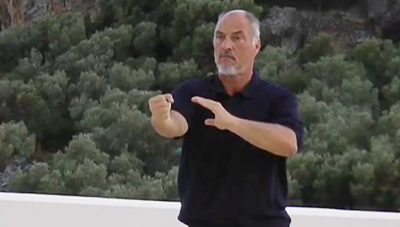
Practicing Tai Chi
Filmed in Crete, Greece 2010 during the Longevity Breathing Instructor Training. *To view clip in high quality, start playing the video and then change the 360p setting in the bottom right to 720p* In July of 2011 I held a Wu Style Tai Chi Short Form Instructor...
Psychic Vampires
'Psychic Vampire' is a term that is dis-affectionately used by many. If you are around a psychic vampire, they will suck your energy dry. When you leave the presence of a psychic vampire, you may feel weak and drained. How does a psychic vampire work and how do they...
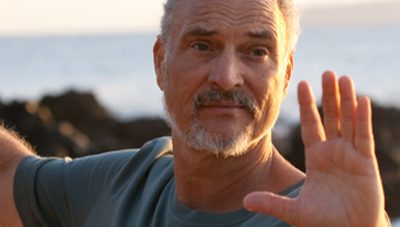
Bagua Circle Walking
Bagua Circle Walking is the central and foundational solo
exercise of bagua zhang (ba gua chang/pakua chang). The greater the skill you develop in Bagua Zhang Circle Walking, the
greater your chances of realizing bagua’s physical, martial and spiritual
value.
Yang Shao Jung – Magnetic Hands
In 1977, I was given a letter of introduction to tai chi master Yang Shao
Jung, who did not accept students without a recommendation. Yang was the eldest
son of Yang Cheng Fu, great-grandson of the original Yang Lu Chan. His school, located in his walk-up flat in the Wan Chai district of Hong
Kong, was announced by a sign in beautiful Chinese calligraphy above the
second-floor balcony. As in many of the older buildings in Hong
Kong, the stairway was particularly dark.
Kenichi Sawai – Spirit of Martial Arts
A member of the Shibuya tai chi school introduced me to Kenichi Sawai’s
hsing-i group, who were fanatics about developing chi through standing
practices. Sawai had studied for 10 years in China with Wang Hsiang Zai, founder
of the I Chuan School of hsing-i. At the time I was introduced to Kenichi
Sawai’s class, it was primarily oriented toward a love of fighting rather than
health and fitness.
Huang Hsi I – Therapeutic Chi
The solidly built Huang Hsi I was about the same height as the average
American man, but tall for a native Taiwanese. His strength and abundant chi—natural and trained—combined with his huge,
immensely sensitive hands, made him a superb healer in Chinese qigong (chi
gung/chi kung) therapeutic bodywork (qigong tui na) and osteopathy. He came
from a farming background and consequently had a strong affinity for living
things, including plants and herbs.
Cheng Man-ching – Master of Tai Chi
One of the people at the aikido school I attended in New York after high school hours was a judo
teacher named Lou Klinesmith. Knowing of my passion for the fighting arts, Lou
asked me one day if I had any interest in finding out about a new kind of
“soft” punch. Curiosity aroused, I replied, “Sure, why not?”
Wang Shu Jin – Master of Chi
In the summer of 1968, I traveled to Taiwan from Japan in search of the internal arts bagua master Wang Shu Jin, who was widely considered to be one of the best empty-hand fighters in Asia. I tracked down Wang’s class, which met at the amphitheater shell in the park in Taichung at 5:30 AM. There were many people in the park at that hour doing all sorts of things, including Shaolin gung fu, karate, tai chi and badminton. Some individuals hung from branches of trees, stretching themselves, some just strolled while others played saxophones.
Hung I Hsiang – Internal Arts Master
When I studied with the late Hung I Hsiang, he was in his fifties. He spoke
with a gravelly voice that sometimes conveyed a bit of gruffness, but in
actuality, Hung was an intelligent, perceptive, well educated and articulate
man. Watching him practice bagua zhang, his small-movement precision was
incredible. The potential for misreading Hung based on interpretation of voice
tone raises an important point about bagua practitioners. I have met many over
the years who practice bagua for all sorts of animal, human and spiritual
reasons. Some have been saints, some sinners.
Morihei Ueshiba – Aikido Master
I studied with O-Sensei Morihei Ueshiba, the founder of aikido, during my
undergraduate days in Japan.
My research has indicated that O-Sensei’s aikido was in a primary way directly
influenced by bagua zhang. My first in-depth, extended experience with a top-level master of internal
martial arts was with Ueshiba between 1967 and 1969.
Get 3 Reports
Access 3 free reports: Secrets of Tai Chi, 30 Days to Better Breathing and Dragon & Tiger Qigong.
View Our Best-Selling Programs